Democratizing water
Democratizing water
The term “democratizing water" refers to the process of ensuring that access to water resources is equitable, inclusive, and representative of the needs and rights of all individuals, communities, businesses and the environment. This concept encompasses various dimensions, including social, political, economic, and environmental aspects.
At ZiZAK, our mission is to “
let the rivers flow again” the way nature intends/intended, and let the humans intelligently adapt their lifestyles and needs to the rhythms of the rivers.
We believe that current knowledge base of hydrological sciences and modern tools, including the artificial intelligence (AI), can help hit this mark.
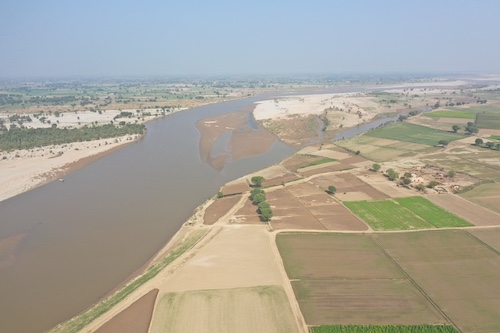
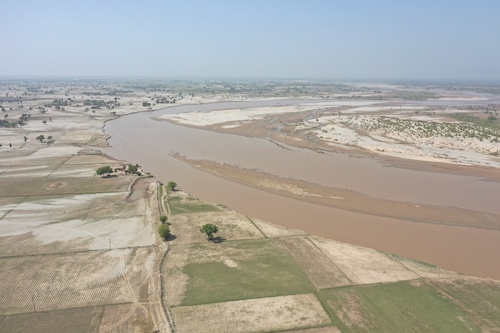
Our current focus is on the Indus River System - the river which has been most mercilessly cut, shut, dammed, diverted, divided and polluted by humans compared to any other river this big on the planet. It is appalling to note that one of intentional treatises allows unlimited pollution in the shared river system - currently impacting the marginalized communities the most. ZiZAK is developing people-centric approaches, rooted in science, to democratize Indus Waters.
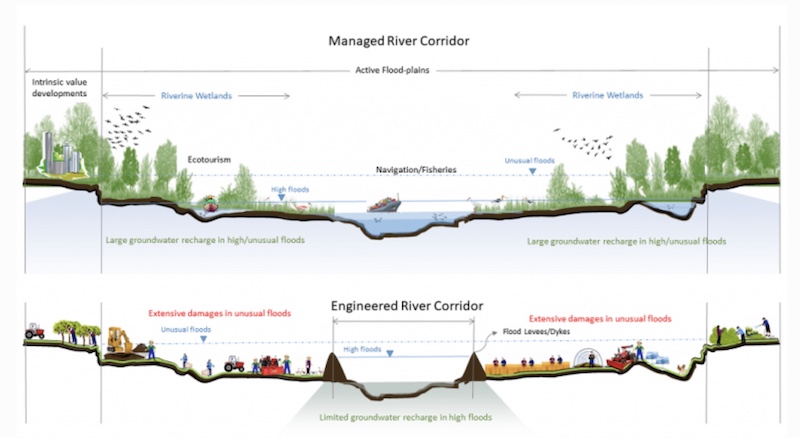
Through education, enforcement and innovations, we aim to ensure:
1. Access and Equity:
◆ Ensuring that all communities, especially marginalized and vulnerable populations, have access to safe and clean water.
◆ Addressing disparities in water distribution and providing infrastructure investments in underserved areas.
2. Community Participation:
◆ Involving local communities in decision-making processes related to water management, allocation, and infrastructure projects.
◆ Promoting participatory governance models that empower citizens to influence water policies and practices.
3. Accountability and Transparency:
◆ Establishing mechanisms to hold water authorities accountable for their actions, ensuring transparency in water management and financial operations.
◆ Facilitating access to information regarding water quality, availability, and management practices to foster informed public engagement.
4. Sustainability:
◆ Advocating for sustainable water resource management that considers ecological limits and promotes conservation.
◆ Incorporating traditional knowledge and practices in water management strategies, recognising local expertise.
5. Regulatory Frameworks:
◆ Creating policies that regulate water rights and distribution, ensuring sustainable abstraction from resources.
◆ Establishing regulatory bodies that serve the interests of public welfare and affordability of clean water.
6. Education and Advocacy:
◆ Promoting awareness about the importance of water as a fundamental human right and educating communities about their rights to water.
◆ Encouraging grassroots advocacy to influence water policies and practices at local and national levels.
7. Integration of Technology:
◆ Utilizing technology to improve access to information, increase efficiency in water use, and enhance management practices.
◆ Promoting innovative solutions to address water scarcity and improve distribution systems.
An Indus Republic Transcending Borders:
Indus River System is one of the most unique hydrological systems on the planet, which transcends political borders:
◆ Comprising of worlds largest valley glaciers which never fail to release pristine quality water in summers.
◆ World’s largest contiguous pristine aquifers under its meandering courses which are naturally recharged in the robust annual cycles of monsoon.
◆ Second largest river delta ecosystem on the Indian Ocean - rich in biodiversity with more potential of carbon sequestration than the rain forests - an ecosystem of global significance.
Future of the inhabitants of the Indus Basin - water security, food security and economic prosperity - hinges on sustainable way of utilizing the Indus. The only way we beat the severe challenges/constraints/disadvantages we unfortunately face, is to fully and intelligently leverage the unique natural advantages we fortunately have (but not yet invoked in our planning). Innovation, modernization and system approach is a must.
Democratizing water in the modern Indus Republic would help achieving broader goals of social justice, environmental sustainability, and public health on the one hand, and on the other, set the stage for similar interventions across the river systems of the world.
Indus Valley in ancient times had been the hallmark of an advanced hydrological civilization. Future Indus Republic could once again become the hallmark of democratic water management and lead the other modern hydrological civilizations of the world.